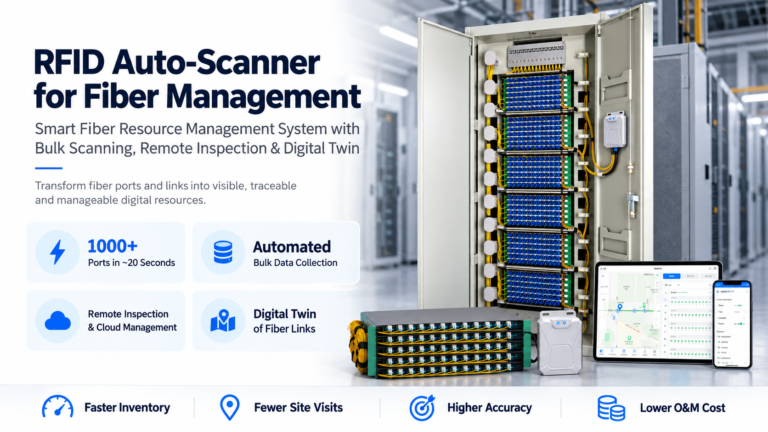
RFID and barcodes can both link a fiber asset to its resource record. For an ODF-room project, choose the identification method by testing the physical layout, the collection workflow and the process for maintaining port and connection records. RFID can support radio-based identification and batch collection; a barcode workflow uses optical scanning. Neither method alone proves that a connection record is correct.
Start with the fiber-management task
A procurement decision should start with the work technicians need to complete: identifying a port, checking a connection, collecting inspection records or updating a resource record after a change. A reader demonstration is only one part of that process. Define the record that each captured identity should open and who reviews exceptions.
The KingNeed RFID Fiber Asset Management System describes RFID asset identification, bulk port scanning, remote inspection workflows, and mobile and digital-twin tools. These are the product capabilities to evaluate in a site pilot; component selection and installation arrangements should be confirmed for the selected configuration.
Compare identification methods at the same site
| Capture method | RFID uses radio-based tag identification; a barcode is read optically. General RFID technology can be read without direct optical line of sight; verify the actual tag and reader arrangement at the site. |
|---|---|
| Collection workflow | Check whether the required task is one-port identification or collecting a defined group of ports. KingNeed describes identifying multiple tagged ports in one operation; verify which ports were read and which were missed. |
| Physical fit | Review tag or label placement, reader access, nearby materials and the existing frame layout. Evaluate installation and servicing conditions before expanding the scope. |
| Record ownership | For either method, agree how captured identities map to the maintained resource record and who approves connection changes. |
| Cost scope | Compare the actual quotations for tags or labels, readers, software, installation, training and ongoing record maintenance. This guide does not estimate prices or promise savings. |
For general capture principles, see GS1 RFID guidance and Zebra’s RFID explanation. These describe technology principles; they do not establish certification, interoperability, read range or performance for a KingNeed configuration.
Run a defined ODF-room pilot
- Prepare the baseline. Choose a room, frame or panel. Independently verify its port identifiers, locations and connection records before evaluating a collection method.
- Agree the configuration. Record the proposed tags or labels, reader or scanning module, platform and field tools. Confirm installation requirements and the work that the offered configuration will support.
- Collect and reconcile. Compare captured identities with the verified baseline. Log missed reads, unexpected identities and records that need review rather than counting every returned identity as a successful physical check.
- Check a field change. Use an authorized maintenance task to review how the observation, connection record, approval and inventory update remain linked.
- Review acceptance. Agree the checks, test conditions and exception responsibilities before the pilot. Expand only after reviewing the results with the project team.
Measure the workflow without assuming a result
| Scope | Room, frame, panel, ports and selected configuration |
|---|---|
| Baseline | Verified resource identities and physical connection records |
| Collection observations | Captured identities, missed identities, unexpected identities and operator notes |
| Timing | Recorded start/end times and task definition; repeat comparable tasks before drawing a conclusion |
| Data update | Reviewer, approval state, update time and unresolved exceptions |
| Decision | Acceptance checks met, remaining issues and proposed next scope |
These are proposed project-review fields, not a claim that the product already exposes each field or meets a universal accuracy target. Agree the required reporting and integration arrangements for the offered deployment.
Prepare a configuration review
Provide the ODF or cabinet type, port layout, approximate port count, existing records, inspection process and required software interfaces. Review the proposed hardware and platform configuration with KingNeed before procurement. The identification layer does not replace separately specified optical signal testing or establish GIS compatibility.
Continue with ODF management planning, fiber network inventory and data modeling, and the RFID fiber asset management product.