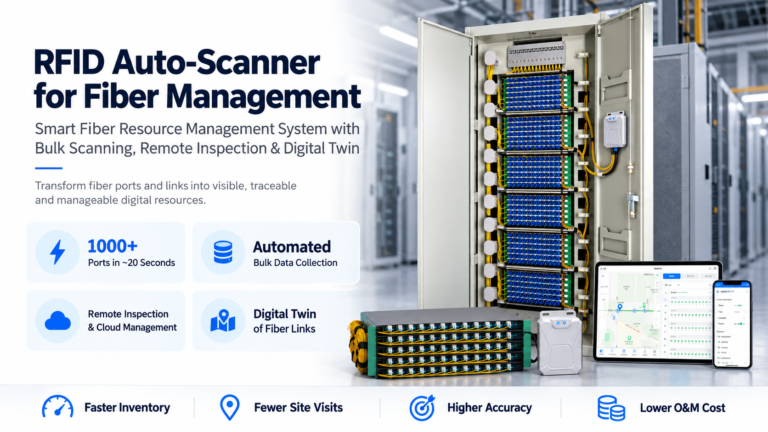
Define asset identity, scanning coverage and field workflows before selecting an RFID fiber asset management system.
Define the asset record
Decide which fibers, ports, racks and locations belong in the resource register. Assign ownership of changes and record how physical identifiers map to the management platform. The product combines RFID asset identification with multiple-port scanning; agree the supported tagging and installation scope before procurement.
Describe the daily field workflow
Specify the steps for on-site connection work, tag collection, inspection records and fiber-path tracing. Ask which tasks use mobile tools and which status updates are scheduled through the platform. Digital-twin visualization should be assessed against the actual records and work orders used by your team.
Write measurable project acceptance steps
Use representative tagged ports and a known reference record. Check identity collection, mapping accuracy, record updates and task handover under the agreed installation conditions. Agree sample size and acceptance criteria with the supplier; the product page does not establish a universal scan range or guaranteed accuracy percentage.
Prepare the quotation request
Send site type, asset and port counts, installation layout, existing record format, required mobile tasks and intended integration boundaries. Separate hardware, software configuration, migration and training responsibilities in the quotation.
Relevant KingNeed products
Review the Fiber Asset Management Systems selection page.