
KingNeed supports a component supply route for overseas solar-storage assembly partners; supplied parts, local assembly scope and project support must be agreed for the selected configuration.
Choose the supply and assembly boundary
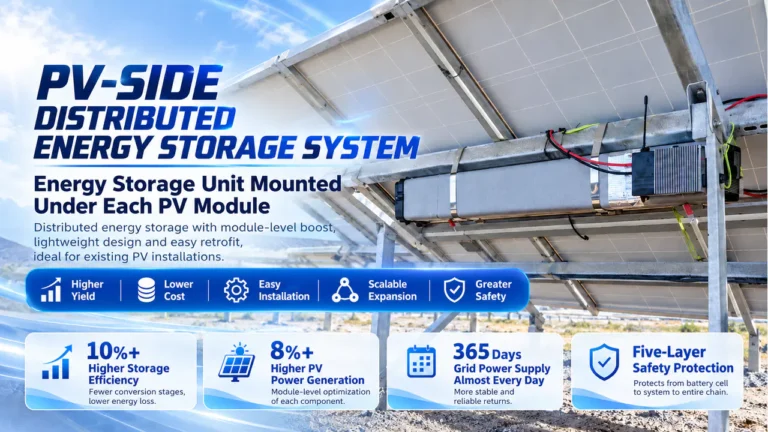
The PV-side system presents component-level distributed storage, while the PV storage bar page includes separated-component and local-assembly options for eligible projects. Describe which operations your local facility will perform and which assemblies you expect KingNeed to supply. Request a project-specific parts list rather than assuming every component shown in concept graphics is included.
Confirm the electrical and mechanical interfaces
Provide PV-module information, existing system topology, mounting arrangement and site conditions. Agree the interfaces between storage units, protection, management and any existing inverter. Component export alone does not establish compatibility with every PV installation.
Agree production and quality responsibilities
Ask for the applicable assembly instructions, inspection points, functional checks and support arrangements available for the selected project. Document who is responsible for local sourcing, assembly workmanship, commissioning and after-sales support. Confirm certification and local compliance requirements for the actual configuration and destination.
Plan a staged project
Start with a defined pilot scope and evaluate the agreed integration and assembly process before increasing quantities. Include packaging, spare parts, training needs and commissioning records in the quotation discussion. Avoid committing a production schedule before the interface and supply scope are confirmed.
Relevant KingNeed products
Review the Distributed Solar Energy Storage selection page.
Export-ready module storage units: size, split pack and kit, and market-access marks
For overseas markets, the documentation describes compact units and a split design intended for local assembly.
Unit size and capacity (as documented)
A single storage unit is less than 1 m long, weighs only 25 kg and has a capacity of 3.2 kWh. The documentation states that this compact size makes transport convenient and substantially reduces cross-border logistics and on-site handling costs.
Split design for local assembly
The documentation describes a split design of battery pack and storage kit. The two parts can be shipped independently and assembled on site quickly using standard cables only. Customers can perform localized assembly in the target market, reducing cross-border logistics and tariff costs and fitting localized overseas operating models, as stated. Agree production and quality responsibilities for the selected project as already described higher on this page; this append does not assign in-country certificate holders.
Certifications stated in the documentation
The product has passed CE, IEC and other international authoritative safety certifications. As stated, it complies with EU and most other countries’ market access requirements and supports direct deployment. Certificate numbers, report IDs and IEC standard editions are not listed in the source documentation used here; request the project-specific document pack for those details.
Related reading
- PV-Side Distributed Energy Storage System
- Distributed Solar Storage FAQ
- Solar Storage Project Cost Factors
- Add Storage to an Existing Solar PV System
- Distributed Solar Energy Storage series
Frequently asked questions
What unit size, weight and capacity does the documentation state for export planning?
A single storage unit is less than 1 m long, weighs only 25 kg and has a capacity of 3.2 kWh.
How does the split battery pack and storage kit design support local assembly?
The documentation describes a split design of battery pack and storage kit. The two parts can be shipped independently and assembled on site quickly using standard cables only, so customers can perform localized assembly in the target market. This is stated to reduce cross-border logistics and tariff costs and to fit localized overseas operating models. The product has passed CE, IEC and other international authoritative safety certifications and, as stated, complies with EU and most other countries’ market access requirements; certificate numbers are not listed here and must be confirmed in the project document pack.